
Download our starter guide today
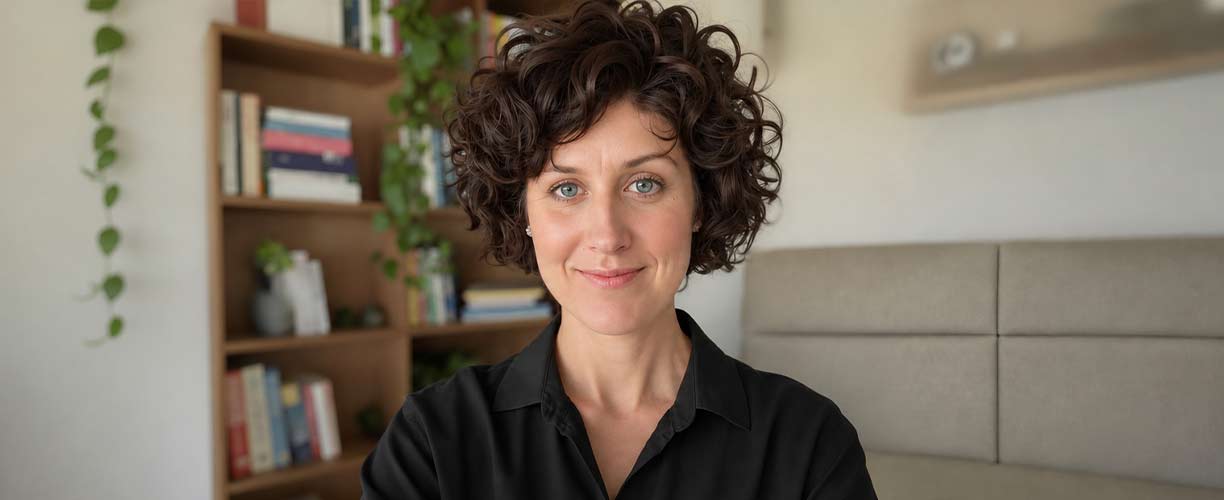
Nearly 30 years after completing her first university degree, Beck Janes returned to higher education with a very different understanding of herself.
This time, she knew she was neurodivergent.
As an AuDHD (Autistic and ADHD) student, Beck had spent much of her earlier education feeling as though she did not fit the mould of what a successful student was supposed to look like.
When she returned to study the Master of Counselling and Psychotherapy at ACAP University College, she discovered a different experience. Rather than being expected to change the way she learned, Beck found an environment where different ways of learning could be accommodated.
In April 2026, that journey culminated in Beck standing in front of her fellow graduates as valedictorian.
Returning to university nearly 30 years later
Beck completed her first degree in the 1990s, long before she understood herself as neurodivergent.
Looking back, she describes that experience as studying in “hard mode”.
“There was a set profile of an ideal student, of what intelligence looked like, what grades you should be getting and how you should do it.”
At the time, Beck did not yet understand herself as neurodivergent and often internalised the difficulties of trying to learn within that narrow model.
“There was that continual feeling that there was something wrong with me because everybody else could do it.”
Returning to university decades later gave Beck an opportunity to experience education with a much better understanding of how she learns.
Finding a different approach at ACAP
At ACAP, Beck encountered a more responsive approach to learning, one that made room for support and flexibility where neither had been available during her first degree.
“The language around it was more accommodation rather than sympathy or pity,” she said.
“It was an acceptance that some people process differently. There wasn’t an expectation that the outcome was going to be less. It was just that the journey to get there was a bit different.”
Beck found lecturers willing to provide flexibility around areas such as extensions and group work, giving her more scope to use and refine approaches that already worked with her way of learning.
More broadly, she found an environment where individual differences were accepted.
“The atmosphere was more of an acceptance and a sense of, ‘How can we help you thrive?’”
For Beck, that distinction matters. Providing flexibility does not mean lowering expectations. It means recognising that students may take different paths towards achieving the same outcome.
Learning your own way
One of the biggest lessons Beck took from her time at ACAP was that succeeding at university did not require her to study exactly like everybody else.
She regularly connected assignments with subjects that interested her, including neurodiversity, and found tools and approaches that helped her organise her workload and process information.
Her advice to other neurodivergent students is to give themselves permission to find the methods that work for them.
“Learn your way,” Beck said.
For people considering university after having a difficult experience at school or during previous study, she recommends speaking with student support about the options available rather than assuming their next experience will be the same.
“Tell them your concerns and you’ll be surprised to hear how far we’ve come and what accommodations there are."
She also suggests starting slowly if necessary and allowing yourself time to rediscover learning through subjects you genuinely care about.
Supporting the neurodivergent community
Beck’s experiences have also shaped the counsellor she wants to be.
Her interest in neurodiversity grew through her own experiences and those of her family. Through counselling, she saw an opportunity to help people better understand themselves rather than simply asking them to fit expectations that may not work for them.
Since completing her Master of Counselling and Psychotherapy, Beck has established Youology, a trauma-informed, neuroaffirming private practice for neurodivergent young people, adults and families. Her work supports people to understand themselves, navigate complex inner worlds and build lives with more clarity, self-trust and choice.
The demand for that support has already been significant, with Beck building a waitlist for her practice.
For her, it demonstrates the need for more practitioners who understand neurodivergence, including those who can bring their own lived experience into their work.
“We need more neurodivergent therapists."
Her ambition is to continue supporting what she affectionately describes as her “neurodivergent tribe”, while encouraging others from the community to pursue education and careers where their perspectives can make a difference.
From “hard mode” to helping others thrive
Almost three decades separate Beck’s two experiences of university.
Her first left her questioning why she struggled with things that seemed to come naturally to others. Her experience at ACAP helped reinforce a very different idea: doing something differently does not mean doing it less successfully.
Being chosen as valedictorian offered powerful recognition of just how far that journey had taken her. More importantly, it reinforced a belief she now brings to her counselling practice: people do not need to become less themselves in order to learn, contribute, connect or thrive.
Now Beck is using what she learned, both academically and personally, to create the kind of spaces she values most, where neurodivergent people can make sense of their complex inner worlds, recognise their strengths, and build lives with more clarity, self-trust and choice. She does this via her own private clinic practice, Youology.
For anyone wondering whether they are too old, too different or simply not suited to returning to study, Beck’s journey offers a compelling message.
Your path might look different, but different does not mean less.