


Bachelor of Counselling
Bachelor of Counselling
- Professionally accredited degree
- Hands-on work placement opportunities
- Learn from experienced industry mentors
- Develop in-demand counselling skills

(9 Trimesters)


Domestic Fees
Bachelor of Counselling
| Units x Cost 24 x $2,833 Annual Course Fee (Indicative)* $22,664 per 1.0 EFTSL** Plus Student Services and Amenities Fee (SSAF) * The Annual Course Fee (Indicative) is charged against individual units of study which may increase from time to time and does not take into account personal circumstances such as RPL, credit, repeats and some specialised electives. ** EFTSL (Equivalent Full-Time Student Load) is a measure of a full-time student's study load for a year. A full-time study load equates to 1.0 EFTSL. Typically, a full-time study load at ACAP is 8 units of study over the year, each with an EFTSL value of 0.125 For more information view the ACAP Fees & Payments page. |
View full fee information here
FEE-HELP Available
Not a domestic student?
View


OVERVIEW
What to expect when studying a Bachelor of Counselling with ACAP University College
Designed to equip you with the practical and soft skills you need for the counselling career you want, ACAP’s Bachelor of Counselling degree provides comprehensive counselling training with a strong focus on reflective practice. When you choose to study counselling with ACAP, our industry expert mentors will empower you to forge a successful counselling career supporting individuals, couples, families or groups in various settings.
ACAP provides a hands-on learning experience, allowing you to explore counselling frameworks, ethical practice and cultural diversity, and develop a wide range of skills across mental health, trauma-informed practice, grief and loss counselling, and more. To solidify your understanding of theoretical concepts, you’ll also undertake 200 hours of industry work placement to gain real-world experience and put your counselling skills into practice.
Our Bachelor of Counselling course is accredited by the Psychotherapy and Counselling Federation of Australia (PACFA), the Australian Counselling Association (ACA), and by ACAP under its self-accrediting authority.
If you’re an international student looking to study a Bachelor of Counselling in Australia, ACAP is the place to be. The course offers a comprehensive grounding to counselling frameworks, essential skills, ethical practices, and cultural diversity. All International students will receive foundational training in counselling, emphasising modern techniques, theories in counselling and psychology, as well as research and practical applications. Our Bachelor of Counselling in Australia course is available to onshore international students at our Melbourne and Sydney campuses.

Potential Careers
Once you graduate from the Bachelor of Counselling, you will open doors to a range of possible career opportunities. Listed below are a few typical roles you could consider.
- Child Protection Officer
- Addictive Behaviour Counsellor
- Grief and Bereavement Counsellor
- Crisis Support Worker
- Trauma Counsellor
WHAT YOU’LL LEARN
In addition to valuable work placement opportunities and fascinating elective units like Crisis Counselling and Addictive Behaviours Counselling, our Bachelor of Counselling is comprised of dynamic subjects designed to provide a holistic overview of the profession.

Acquire specialised skills across the core stages of mental health – prevention, early intervention and intervention. Develop mental health literacy by exploring programs and strategies suited to a diverse range of individuals.

Explore the principles of ethical-informed trauma counselling. Learn to identify a range of traumatic triggers and indicators of trauma responses and build confidence in using assessment tools for trauma-related presentations.

Develop a deep understanding of the counselling profession and an applied understanding of key counselling skills including focusing and empathetic confrontation skills, reflection of meaning and reframing.

Study cutting-edge concepts including neural development and integrating neuroscience with counselling skills. Explore the connection between mind/body health and the development of interpersonal relationships, resilience and self-esteem.

Discover grief and loss theories, models and interventions. Explore how these concepts are presented across the lifespan and how counsellors can practise self-care while supporting clients through these experiences.

Master contemporary therapeutic approaches for working with children and young people, using e-therapy, telephone counselling and integrative modalities. Explore key theories of development pertinent to children and adolescents within legal and ethical frameworks.
FREQUENTLY ASKED QUESTIONS
For the Bachelor of Counselling
- A Bachelor of Counselling is a nationally accredited degree recognised by the two primary professional counselling bodies in Australia, the Australian Counselling Association (ACA) and the Psychotherapy and Counselling Federation of Australia (PACFA). Completion of this degree enables graduates to practise as qualified counsellors in Australia, subject to meeting professional registration requirements.
- Following completion of a Bachelor of Counselling, graduates may also choose to further advance their professional knowledge and career opportunities by undertaking postgraduate study, such as a Master of Counselling and Psychotherapy.
Counselling can be a very rewarding career path, allowing you to support vulnerable members of society across areas including relationships and families, grief and loss, trauma, mental health, and addiction. Roles are commonly found across healthcare, social assistance, education, public health, community safety, private practice and as well as within the broader public sector.
These are just some of the directions your Counselling degree might take you:
- Addiction and Substance Abuse Counsellor
- Child Paediatric Counsellor
- Community Support Worker
- Crisis Support Counsellor
- Grief and Bereavement Counsellor
- Marriage and Family Therapist
- Mental Health Counsellor
- Rehabilitation Counsellor
- School Guidance Counsellor
- Your teachers are experienced counselling academics and practitioners who bring real-world expertise into the course. They will work with you to support both your theoretical learning and practical skill development.
- You will have the opportunity to study some of the units in person while others through a blended online delivery mode.
We are one of the largest higher-education providers in the country, recognised for our strong focus on student support and real-world readiness.
- A Bachelor of Counselling degree can vary in duration. At ACAP, we prioritise flexibility for our students – this means you can choose to study your degree full-time (3 years) or part-time, which allows you to study at a steadier pace (up to 6 years).
- To become a qualified Counsellor in Australia, completing one of our accredited counselling courses is the ideal first step for those interested in the profession.
- Our Diploma of Counselling acts as an entry-level qualification, while our Bachelor of Counselling degree involves a longer duration of study and compulsory work placement hours that ensure valuable practical experience. As a result, the bachelor’s qualification also allows you to support clients with more complex care needs.
- While studying with us, you’ll receive free student membership with Australia’s accrediting bodies, the Australian Counselling Association (ACA) and the Psychotherapy and Counselling Federation of Australia (PACFA). We recommend that after graduating from your ACAP Counselling degree, you formalise your registration with a professional association as this membership status is viewed favourably by employers.
Yes. The Bachelor of Counselling includes at least 200 hours of supervised practice placements as part of the training program. Within these hours, students complete a minimum of 80 hours of direct client contact, which may occur in person whenever possible, or online via video or telephone. These placements provide valuable hands-on experience, allowing students to apply their learning in real-world counselling settings under professional supervision.
A common question we receive is whether it’s possible to study a Bachelor of Counselling online. At ACAP, we offer blended delivery – this means that while some of our counselling units are available to be studied online, there are components of subjects and assessments that will need to be completed in-person and on-campus.
There are significant differences between psychology and counselling, including the knowledge bases, required skills, duration of study, and career outcomes.
- Psychology is the science of human behaviour with an emphasis on research, assessment, and statistical analysis. It focuses on how people think, feel and behave at an individual, group, organisational and community level. From an academic perspective, psychology involves a 6-year sequence of study to become a registered Psychologist in Australia.
- Counselling focuses on interpersonal relationships and requires advanced knowledge of human behaviour and ethical and professional standards. Counsellors help clients overcome everyday challenges such as relationship problems, behavioural challenges and emotional difficulties that may be a result of grief, loss, addiction, stress, or relationships.
The hours for placement are based on the old standards: A minimum of 200 hours of placement which includes 40 hours of counselling.
WHY CHOOSE THE BACHELOR OF COUNSELLING AT ACAP
ACAP’s Bachelor of Counselling online* equips students with the practical expertise required to forge a successful career as a Counsellor in Australia. By studying the Bachelor of Counselling online*, you’ll enjoy unrivalled student support services and a personalised learning experience unlike that of other higher education providers.
*Online studies require some compulsory face-to-face hours on-campus.
Course structure
The Bachelor of Counselling course is made up of 24 units, which are level 100, 200 and 300 units. To find out unit delivery information view the relevant Yearly Planner.
The course duration is 3 years full time or part time equivalent. For more information on the recommended course sequence click here.
View unit descriptions
- Demonstrates an integrated level of professional knowledge and skills of counselling research, theory and practice to ensure and enhance rigor within the counselling field.
- Competently integrates the evidenced-based frameworks, theories and practices of the counselling field with a high level of autonomy and accountability for sustainable professional practice.
- Skilfully generates helpful processes to support diverse people in society through critical application of the ethical and professional responsibilities of counselling.
- Skilfully and critically reflects, interprets and evaluates personal and professional development and effectively applies the ethos of lifelong learning, self-care and wellbeing as a professional counsellor.
- Displays a professional commitment to the principles of social justice to authentically engage with, empower, include and enable individuals, groups and communities across diverse contexts.
- Skilfully operates and demonstrates learning and working practices across multiple twenty-first century platforms, reflective of contemporary counselling contexts for sustainable, relevant professional application in alignment with the Psychotherapy and Counselling Federation of Australia (PACFA) and the Australian Counselling Association (ACA).
Recognition of Prior Learning is available for some units in the Bachelor of Counselling qualification. It is not available for the following units:
- COUN3311 Work Placement Experience and Supervision 1
- COUN3321 Work Placement Experience and Supervision 2
- COUN3331 Coaching Practice and Supervision
Graduates of the Bachelor of Counselling are career-ready practitioners, capable of making a positive, lasting impact on the lives of others. Upon completion of their undergraduate studies, students can choose to further their skills and expertise by studying the Master of Counselling and Psychotherapy.

Our stories
Shaping the next generation of counsellors
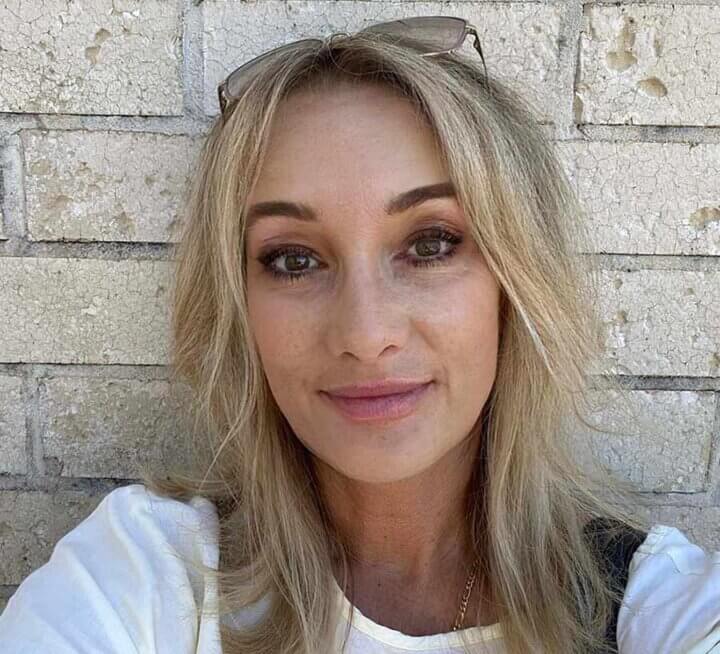
The biggest surprise for me really has been the awesome friendships I have forged with my fellow students at the Byron Bay campus.


Available Part Time Equivalent
Available Part Time Equivalent
Available Part Time Equivalent